
Research overview
LUMHR is organised around three themes: Connect, Prevent, and Respond. Together, these themes move from understanding need, to co-designing solutions, to testing and implementing new approaches in real-world settings.
The overall programme logic is:
- Understand where needs, barriers, and strengths are.
- Work with people and communities to design practical responses.
- Test what works, for whom, in what contexts, and why.
- Share learning so it can improve services, policy, and future research
Prevent
Helping people and communities stay well
- Understand what matters locally through the Living in Lincolnshire panel, community insight, and needs assessment
- Develop personalised and community-based support including JITAIs and community resilience approaches
- Test wellbeing and resilience interventions in real-world settings
Connect
Improving access to mental health support
- Map needs and access gaps using linked data, local intelligence, and community insight
- Co-design access solutions shaped to fit local places, communities, and services
- Test promising access interventions through small-scale feasibility work
Respond
Improving crisis care and suicide
prevention
- Understand crisis and suicide patterns through linked data, lived experience, and observatory work
- Co-design better crisis responses with partners, practitioners, and people with lived experience
- Test practical crisis-support models, training, and implementation approaches
Previous research
Guiding Lincolnshire’s Mental Health Research
What is it?
The GLiMHR Project preceded LUMHR, and completed its core aim of identify research priorities for future mental health research in Lincolnshire. Lincolnshire has historically been underserved in terms of mental health research investment and participation. The GLiMHR Project was designed to help address this gap, laying the foundation for a Lincolnshire-based Mental Health Research Group (MHRG) aligned with the NIHR’s ambition to direct research into areas of highest need.
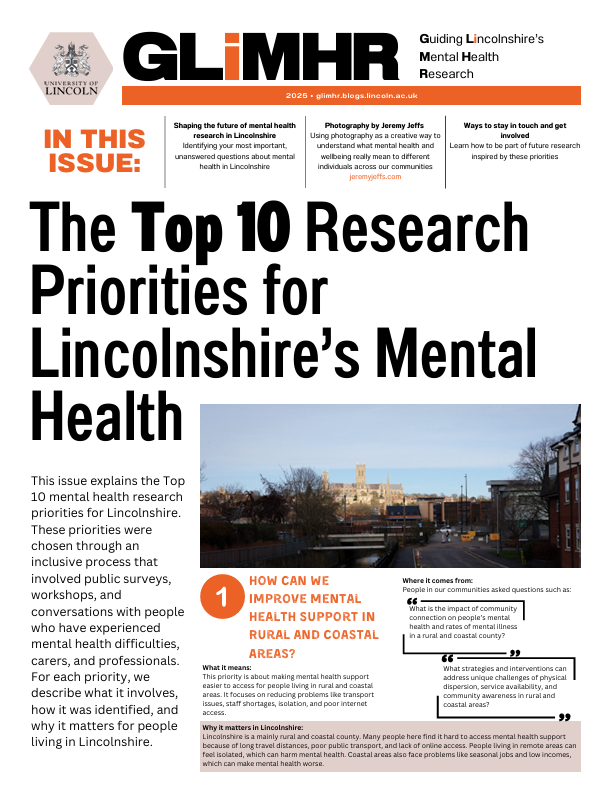
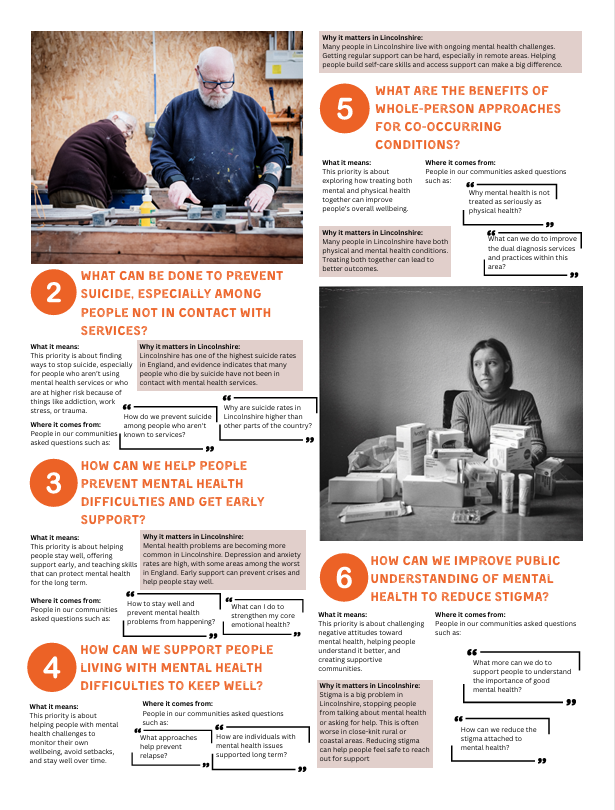
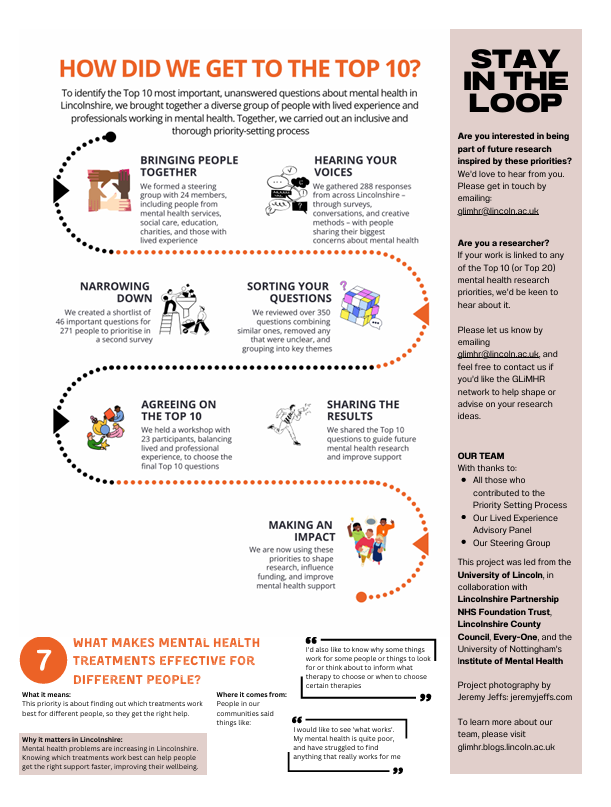
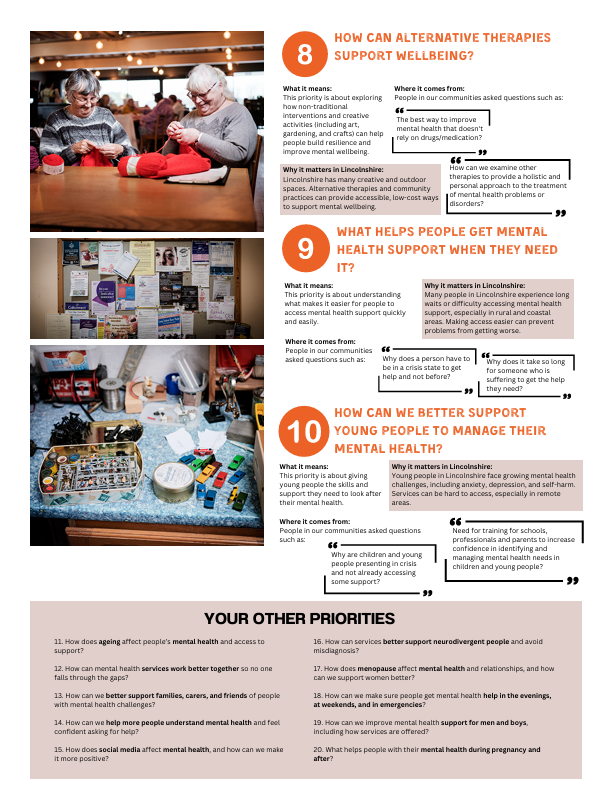
GLiMHR identified the top 10 mental health research priorities for Lincolnshire, chosen through and inclusive process that included, public surveys, workshops, and conversations with people who have experienced mental health difficulties, carers, and professionals
Click here to check out GLiMHR’s Top 10 Priorities
How has this impacted LUMHR?
Finding from the GLiMHR project have been used to inform future research, policy and practise in LUMHR. The insights gained locally will also support international understanding of mental health issues in communities like ours – including ways to promote mental health in rural and coastal areas